

The following blog post was kindly written for us by our student volunteer Honor Mackenzie.
As a Museum Studies student on work placement at the North Ayrshire Heritage Centre, I have been working behind the scenes alongside my fellow student, to catalogue objects from the collection stores. Although much of this work takes place outwith public view, it plays part of an essential role in preserving and understanding the stories held within the collection.
Having grown up hearing family stories connected to Ayrshire, this experience has felt particularly meaningful. It has highlighted how museums go beyond safeguarding objects, by also preserving traces of lived experiences and allowing components of past lives to be understood and shared.
A key part of my interest in museum work stems from storytelling. Cataloguing objects encourages me to think about the people they once belonged to and who once used them, showing how everyday items can become part of historical records. Objects we use in our daily lives could one day be sitting in museum stores, contributing to how our present is remembered in the future.
During my placement, we have been working through boxes in the collection stores relating to social history; cataloguing their contents using the museum’s digital collections system. This involves photographing objects, writing descriptions, and connecting them with accession records in order to understand where they came from and why they came to be in the museum’s collection.
Digitising this information ensures that objects can easily be searched, located, and monitored over time. As well as preserving important historical records that might otherwise be lost through damage or deterioration.
One of the most exciting aspects of this work has been opening each box without knowing what we might find inside. Many of the objects relate to social history, offering small but meaningful insights into daily life. Before researching them, we would often try to guess what they were and how they were used – sometimes successfully, but not always!
This process has highlighted how even the most ordinary objects can hold unexpected stories, and how cataloguing is not just about documentation, but about uncovering and preserving our connections to the past.
I also really valued working alongside the staff at the North Ayrshire Heritage Centre, whose day-to-day work, from supporting visitors to managing collections, highlighted how much ongoing effort goes into keeping local heritage visible and maintaining its relevance to the community.
Below I have included some of the objects I found particularly interesting.
Medical Bandage
An object that caught my attention was a large foldable bandage in a triangular shape with instructions and illustrations showing how it could be used printed on the actual material itself.
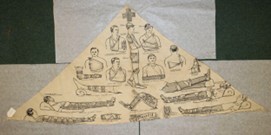
This design was a key innovation in first aid, created by German surgeon, Friedrich von Esmarch (1823-1908) following his experiences on the battlefield, which led to his desire to improve military first aid techniques.
The bandage has many different applied uses, including as a tourniquet to stop bleeding or stabilising a broken limb. It would have been folded up neatly into a small package, to keep it portable, sanitary, and ready for use. By the late 19th century, it was widely adopted across the UK. It remained in use into the early 20th century and would have likely been familiar to soldiers during both world wars.
Marbles
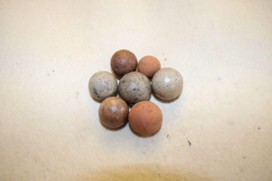
These small clay marbles, popular between the 1850s and 1930s and often referred to as ‘commies’, were another fascinating find. Although mostly used as children’s toys, they had surprising additional uses. Ships once loaded clay marbles into their keels as ballast, when journeying to the Americas; many were lost overboard and sometimes wash ashore today as smooth sea-polished marbles.
They were also used in Codd bottles, designed to prevent fizzy-drinks from spilling. Featuring a marble in their strangely shaped neck to keep contents sealed and carbonated.
Egg Cosies
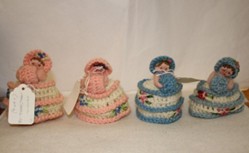
These Victorian-era knitted egg cosies, shaped like small ladies, stood out simply because of their charm. They would have been placed over boiled eggs to keep them warm before serving. Similar patterns have survived today and show how everyday domestic items can reveal a great deal about past tastes and habits.
Portable Ashtray
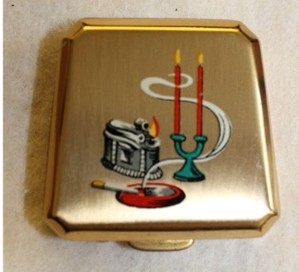
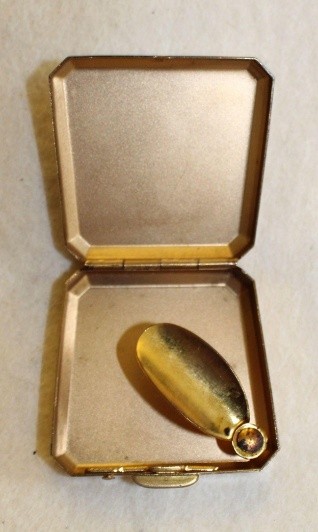
I was also intrigued by a portable pocket ashtray from the early 20th century. These small cases, varying in decoration, were designed for people travelling on trains or in early motor cars, providing a tidy way to dispose of ash and prevent litter. Their popularity rose alongside smoking culture, but declined as indoor and public smoking became increasingly restricted.
Cutthroat razors
One of the boxes contained a surprising number of straight-edged foldable razors. While the exact origins of this design are unclear, similar tools were used by the ancient Egyptians, Greeks, and Romans. The form most recognisable today was developed in 18th century England, and has remained largely unchanged for generations.
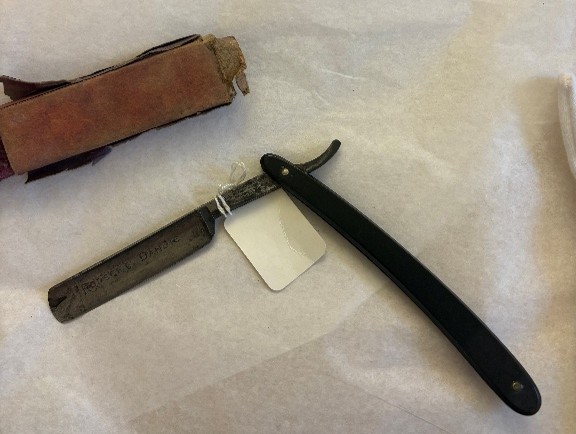
Unlike modern disposable razors, these were designed to be maintained rather than replaced. Through regular sharpening using a leather strop, they were often kept for many years and became personal effects of their owners. This highlights a shift in how everyday objects are used and valued; from long-term personal tools to short-term disposable items.
Although ordinary at first glance, these objects reflect the everyday lives, habits, and innovations of the past. Reminding us that even the most familiar items can carry lasting historical significance.